• תמונה1
  • תמונה 2
  • תמונה 3
  • תמונה 4
  • תמונה 5
  • תמונה 6

One Place for all your research needs

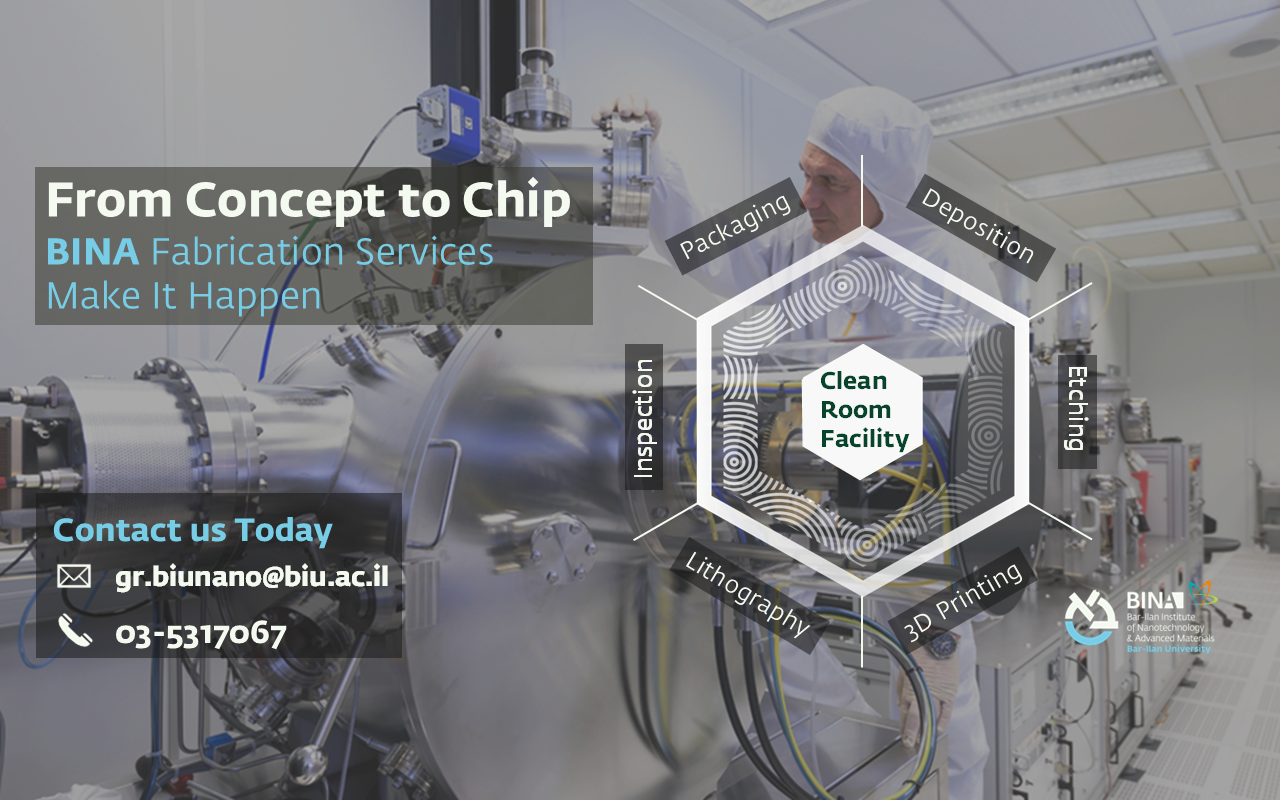
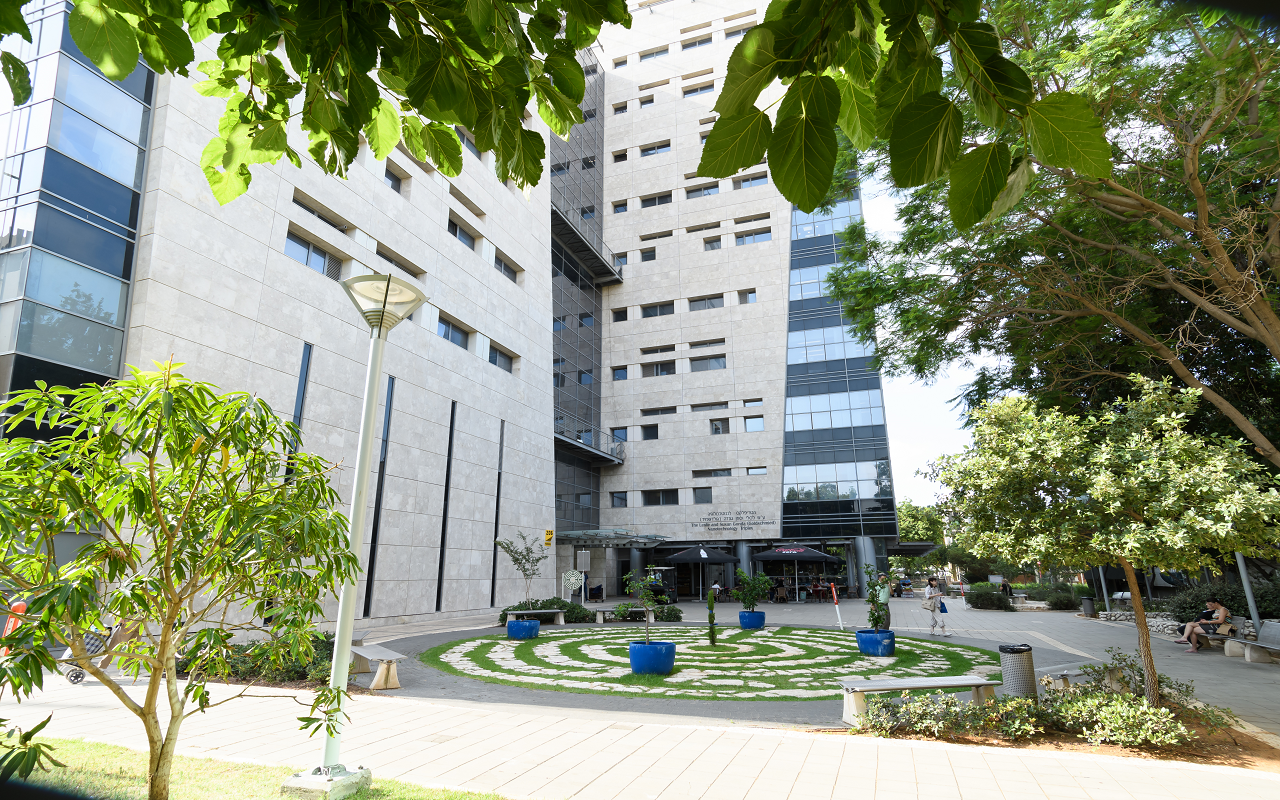
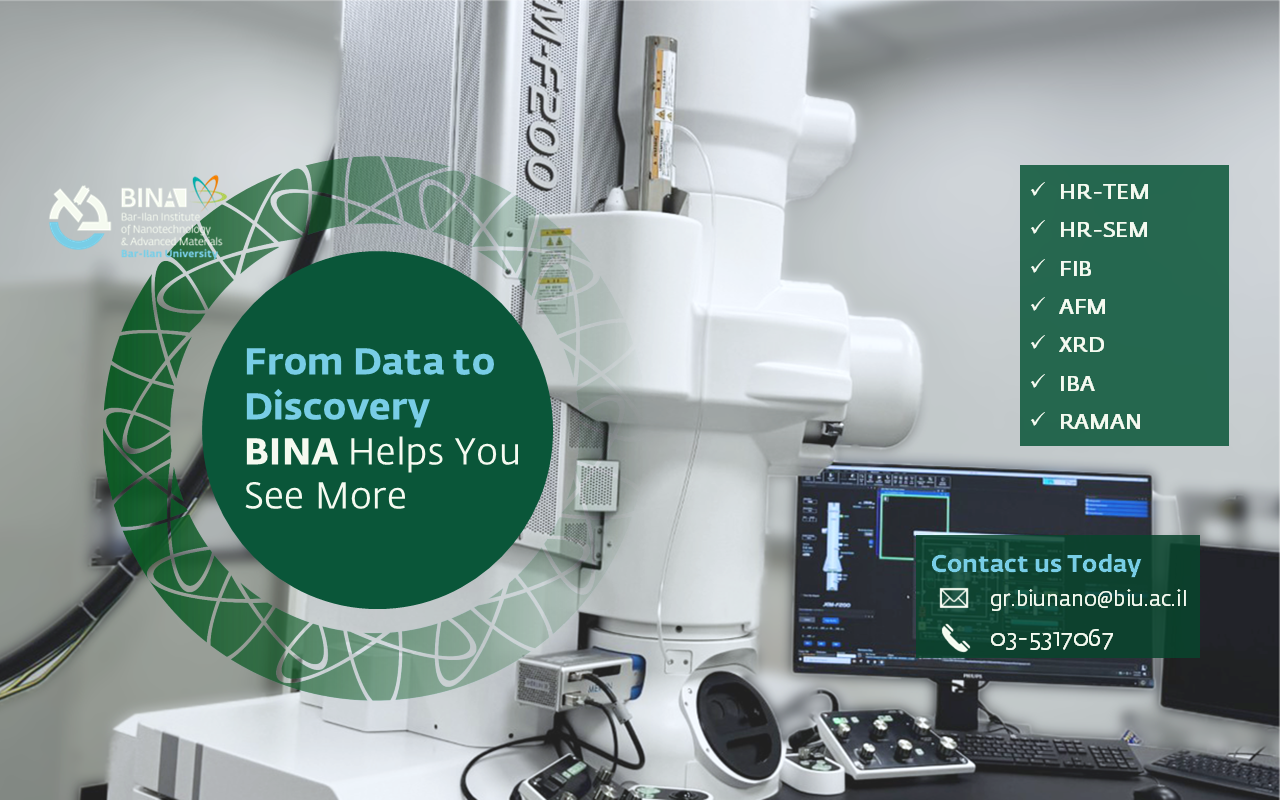
The Bar-Ilan Institute for Nanotechnology and Advanced Materials (BINA) is a leading global hub for research, innovation, and collaboration in nanotechnology and advanced materials, offering cutting-edge facilities through the BINA Center for Scientific Equipment. The BINA Center operates two main service divisions: Fabrication and Characterization, in addition to the Project & Industrial Relations Unit and Administration. Operating in full compliance with the ISO 9001 standard, BINA
upholds the highest standards of quality and excellence.


Find out what's going on
Bar Ilan's Institute of Nanotechnology and Advanced Materials (BINA)
PolyX Whats New?
We’re proud to be part of this winning consortium and to take an active role in the…
Icon Scientific Instrument
Specifications:Parameter Scanner: X-Y scan range 30 μm- 90μm x 90μmParameter…
photonics Research Fields
Nanophotonics is a rapidly growing and interdisciplinary field that requires…
Prof. David Zitoun Academic Staff

Bottom-up approach of nano-devices

The aim of the laboratory is to elaborate nano-components for batteries, fuel cells, redox-flow batteries and sensors. The laboratory works on the integration of these nano-building blocks in devices.

Dr Zitoun's lab develops an alternative route to elaborate thin films using wet chemistry deposition. Two major routes are explored; the first one consists in the colloidal synthesis of nanospheres and nanowires which are spread on the substrate by wet coating. In a second approach, the molecular precursor is directly targeted to the substrate and reacts in situ. The lab synthesizes reactive organometallic complexes and studies the thermolysis, photolysis and chemical reduction of these complexes. Dr. Zitoun brings a major achievement with the use of designed reactive organometallic precursors that could be decomposed to form metallic coatings down to room temperature. This approach allows direct synthesis on the desired substrate (metallic, plastic...) with the use of standard coating equipment and/or state of the art research equipment, like Atomic Layer Deposition.
 

Particular research areas (projects):

1. Nanomaterials

2. Energy storage

3. Magnetism